
Powering resilience: scaling rural electrification in challenging environments
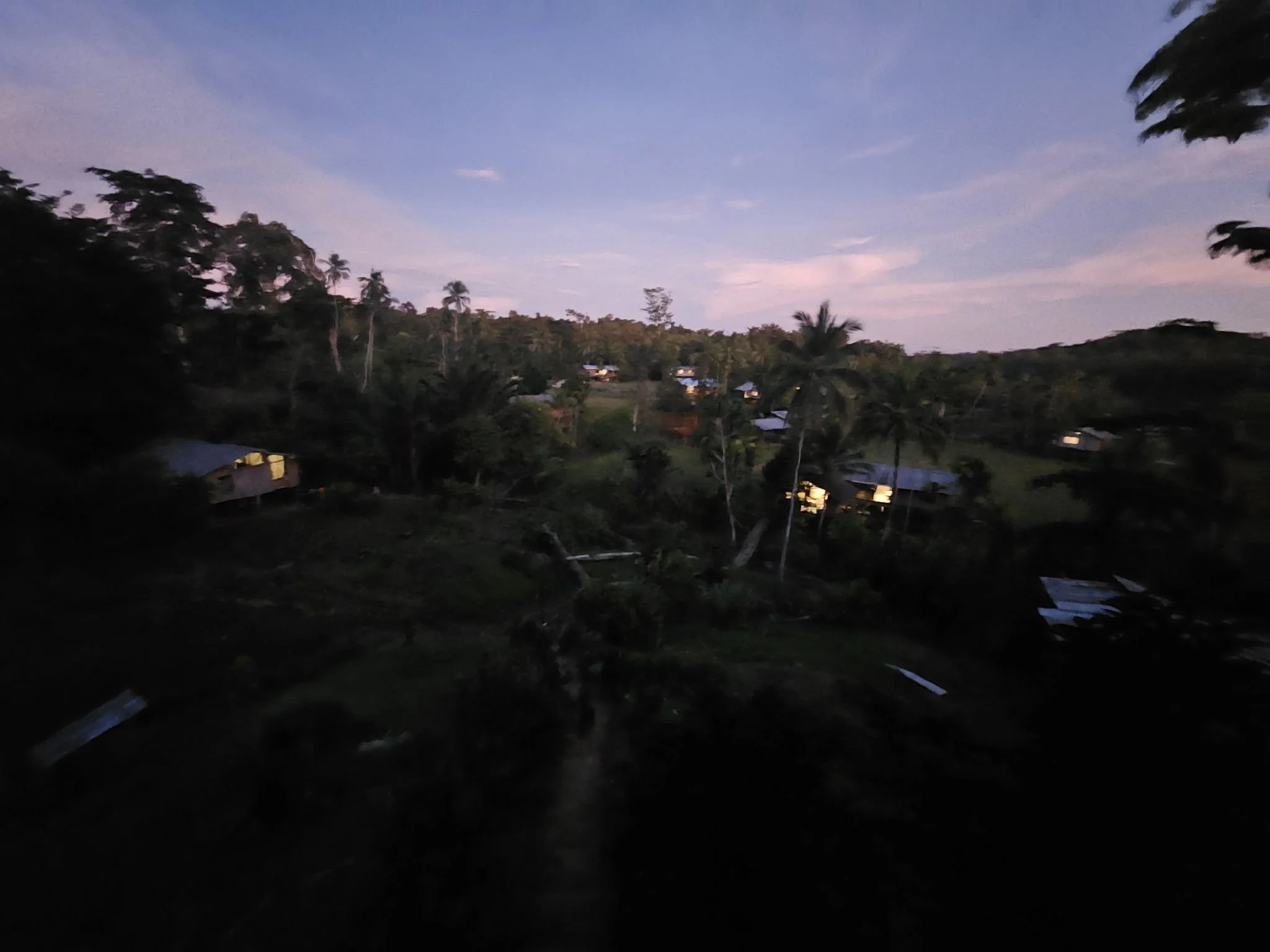
FutureValue: Morere Village, PNG - dusk & lights on for the first time, 19 February 2026Future Value Global is a regenerative development company focused on practical, place-based solutions that balance economic, social and environmental returns. We design and deliver community energy systems that do more than power homes: they strengthen local livelihoods, health services and digital access while building durable community ownership. Our work in renewable energy is rooted in regenerative principles: we prioritise local capability, participatory design, and outcomes that repay nature’s debt by avoiding fossil fuel use and supporting resilient livelihoods.
We have demonstrated this approach in remote and challenging contexts. The Morere Village solar‑BESS demonstrator in Kikori District, Gulf Province, Papua New Guinea, delivered with UK Government co-funding, provided household electrification, productive‑use planning, community governance and local maintenance training. We have also completed feasibility studies for critical infrastructure: a hospital energy transition on Bohol Island (Central Visayas, Philippines) and a remote hospital in Kikori District, PNG, both projects now in discussions to be developed. These projects show our capability to work across community and institutional settings, translating energy access into measurable social and operational benefits.
Our delivery model
FutureValue’s delivery model turns local evidence into investable, replicable energy projects. It consists of six linked elements:
Evidence‑first assessment: We begin with socio‑economic baselines, household surveys and/or site assessments, and detailed load profiling. This empirical work defines real demand, seasonal patterns and critical loads (e.g., maternity, cold chain), ensuring systems are neither over‑ nor under‑sized.
Community co‑design and governance: Weconvene inclusive workshops to identify productive uses, set tariffs, and form governance bodies (cooperatives or committees). Early co‑design secures local buy‑in, clarifies benefit sharing, and creates revenue pathways for operations and repairs.
Context‑aware technical design: Using the demand data, we specify PV arrays, BESS capacity, inverters, controls and resilience features. Designs consider site constraints, maintenance simplicity, and options like swappable batteries where transport electrification is relevant.
Supply‑chain managed procurement and logistics: We manage procurement to strict specifications, coordinate importation, and organise last‑mile shipping and handling. This reduces the common execution risks in remote projects and keeps timelines and budgets credible.
Commissioning, monitoring and local O&M: On‑site commissioning validates performance against the demand model. Remote telemetry (VSAT/cellular) and MRV routines enable preventive maintenance and transparent reporting. We train local technicians and transfer operation manuals and spare‑parts plans.
Financial and scaling pathways: We prioritise productive‑use interventions that generate user revenue (cold storage, agro-processing, etc). Combined with documented O&M costs and MRV evidence, projects become viable for blended‑finance and carbon‑linked revenue, improving long‑term bankability.
Why this matters
This integrated chain reduces technical, delivery and demand risk, the main barriers to scaling rural electrification in developing markets. End users receive reliable power, reduced fuel costs and new income opportunities. Hospitals and businesses gain energy security and continuity. Donors see measurable development impact. Investors see clearer paths to returns because projects are evidence‑driven, community‑owned and operationally proven. For PNG’s rural electrification ambitions, this approach creates a practical route from pilot to scale: replicable village systems that align with national targets and partner programmes.
Delivering resilience
Over four years on the ground in PNG, FutureValue has built sustained relationships, local capacity and a track record of delivering in some of the country’s most challenging environments. Our experience of working closely with community, including surveys and co-design through to procurement, logistics and commissioning, demonstrates we can move projects from concept to reliable operation while embedding local ownership and technical capability. That continuity of presence and proven delivery underpins the credibility of our approach and its readiness to be replicated at scale across rural PNG and similar contexts.